
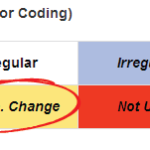
 If you’ve used SpanishConjugation.net, you might have noticed our color coding. We point out conjugations that are irregular and forms that are not used, but you may be wondering what an ortho change is.
An orthographic change is a spelling change required in order to maintain the sound of the original infinitive.
Orthographic changes are needed because the sound of certain consonants change depending on the vowel that follows. For example, the c in “vencer” sounds different than the c in “vencar.” Therefore, certain conjugations of “vencer” require a spelling change in order to maintain the s sound heard in the infinitive. Similarly, certain conjugations of “vencar” require a spelling change in order to maintain the k sound heard in that infinitive.
These changes allow the strict rules of spelling (i.e., orthography) to be mapped to the actual pronunciation of the words. Orthographic changes are predictable and are usually not considered irregularities.
Below are the common ortho changes using examples from Wikipedia of the present subjunctive, first person plural:
- c/qu: tocar > toquemos, delinquir > delincamos.
- z/c: gozar > gocemos, vencer > venzamos.
- g/j: proteger > protejamos. But in verbs ending in -jar, the j is kept before e: mojar > mojemos.
- g/gu: negar > neguemos.
- gu/gü: averiguar > averigüemos
For a great real-world explanation of orthographic changes, check out this SpanishDict.com forum response. Some additional ortho changes are mentioned on Wikipedia.